Saltar navegación e ir al contenido principal
Biblioteca digital de Bogotá
Logo BibloRed
Cargando contenido
¿Qué estás buscando?
  • Escribe palabras clave como el título de un contenido, un autor o un tema que te interese.

  • Búsqueda avanzada

Seleccionar

Contenidos y Experiencias Digitales

Filtrar

Formatos de Contenido
Tipo de colección
Género
Idioma
Derechos de uso

Selecciona contenidos según las condiciones legales para su uso y distribución.

Estás filtrando por

Cargando contenido

Se encontraron 739 resultados en recursos

Imagen de apoyo de  La Experiencia De La Diada Paciente – Cuidador Familiar En Cuidados Paliativos Durante El Proceso De Transición Entre El Hospital Y El Hogar

La Experiencia De La Diada Paciente – Cuidador Familiar En Cuidados Paliativos Durante El Proceso De Transición Entre El Hospital Y El Hogar

Por: Edier Mauricio Arias Rojas | Fecha: 2014

Resumen: Antecedentes y objetivo: Se llevó a cabo una revisión de la literatura que evidencia problemas y necesidades en la diada paciente – cuidador familiar en cuidados paliativos durante el proceso de transición entre el hospital y el hogar. Estas necesidades tienen relación con: los conocimientos relacionados con la enfermedad, los sentimientos del cuidador y del paciente al alta, la comunicación efectiva, la educación para el cuidado a domicilio, el apoyo a la diada en el domicilio y la sobrecarga del cuidado - soporte social para el cuidador. La escasa evidencia sobre las experiencias en el proceso de transición hospital-hogar, así como de estudios en el ámbito latinoamericano, llevan a plantear una propuesta de investigación con el objetivo de describir la experiencia de la diada paciente – cuidador familiar en cuidado paliativo durante el proceso de transición entre el hospital y el hogar, en el contexto colombiano. Materiales y métodos: Esta propuesta se llevará a cabo utilizando metodología cualitativa con abordaje de teoría fundamentada. Los informantes del estudio serán pacientes y cuidadores familiares en cuidados paliativos en una institución sanitaria de Bogotá-Colombia. Para la recogida de datos, se utilizará la técnica de la entrevista familiar semiestructurada, que se realizará a las diadas en el hospital y posteriormente en el domicilio. El análisis de los datos se hará a través del método comparativo constante. Implicaciones prácticas: Conocer las experiencias de la diada al alta hospitalaria, saber los retos a los que se enfrentan en el domicilio y las necesidades que tienen durante este proceso, ayudaría a mejorar la atención a estas familias que requieren de cuidados paliativos. Abstract : BACKGROUND AND OBJECTIVE: We carried out a review of the literature that evidences problems and needs in the patient - caregiver family in palliative care during the transition process between the hospital and the home. These needs are related to: knowledge related to illness, feelings of caregiver and patient on discharge, effective communication, education for home care, home support and care overload - support For the caregiver. The lack of evidence on experiences in the transition process from home to hospital, as well as from studies in the Latin American context, lead to a research proposal with the objective of describing the experience of the patient-caregiver family in palliative care during the Process of transition between the hospital and the home, in the Colombian context. Materials and methods: This proposal will be carried out using qualitative methodology with a grounded theory approach. The informants of the study will be patients and family caregivers in palliative care at a health institution in Bogota-Colombia. For the collection of data, the semi-structured family interview technique will be used, which will be done at the dyads in the hospital and later at the home. The analysis of the data will be done through the constant comparative method. Practical implications: Knowing the experiences of the hospital discharge, knowing the challenges they face at home and the needs they have during this process, would help to improve care for these families that require palliative care.
Fuente: Biblioteca Virtual Banco de la República Formatos de contenido: Tesis
  • Temas:
  • Otros
  • Medicina

Compartir este contenido

La Experiencia De La Diada Paciente – Cuidador Familiar En Cuidados Paliativos Durante El Proceso De Transición Entre El Hospital Y El Hogar

Copia el enlace o compártelo en redes sociales

Imagen de apoyo de  Physical activity promotion at the local level: municipal sport authorities participation in Colombia = Promoción de la actividad física en el nivel local: participación de las autoridades deportivas municipales en Colombia

Physical activity promotion at the local level: municipal sport authorities participation in Colombia = Promoción de la actividad física en el nivel local: participación de las autoridades deportivas municipales en Colombia

Por: Daniela Rozo Salazar | Fecha: 2014

Physical activity promotion (PAP) has reached policy agendas worldwide due to the social and economic burden that non-communicable diseases have generated. Colombia is one of the countries that have taken the challenge of promoting healthy lifestyles in order to reduce this burden and in addition, take advantage of other benefits that promoting this healthy lifestyle brings. Although some research has been done on the field, no studies related to the local government contribution were found. The local government plays a crucial role in PAP, considering that it has a great influence on the physical and social environment of a city and consequently in the individual behavior of its citizens. Additionally, it has a great responsibility concerning public health, social and economic development and environmental sustainability, aspects that are related to PAP. The present research, aims to provide a general overview on the current state of PAP in the Municipal Sport Authorities (MSAs) of one department of Colombia. In this sense, it is important to highlight that the sport sector has had a major role in PAP in the country and the department. Hence, structured interviews were conducted among heads of the MSAs of the 14 municipalities of the department and development plans were analyzed. Using this data, two main aspects were studied in order to achieve the research aim: the current PAP interventions and the conditions to promote physical activity (PA) in the department. Results indicate that the current PAP interventions have both strengths and weaknesses. Among the most important aspects, it was noticed that PAP in Risaralda has neglected important environmental determinants for PA behavior. PAP has been oriented from an “anthropic” perspective (targeting the individual). However, this seems to have had a positive effect on PA levels in the department. Concerning the conditions to promote PA, there are important findings related to the knowledge and skills of policy-makers and the management process used to develop the interventions. Some of the weaknesses found in the interventions might be related to the conditions to develop them. Recommendations to MSAs and for further research are given.
Fuente: Biblioteca Virtual Banco de la República Formatos de contenido: Tesis
  • Temas:
  • Otros
  • Medicina

Compartir este contenido

Physical activity promotion at the local level: municipal sport authorities participation in Colombia = Promoción de la actividad física en el nivel local: participación de las autoridades deportivas municipales en Colombia

Copia el enlace o compártelo en redes sociales

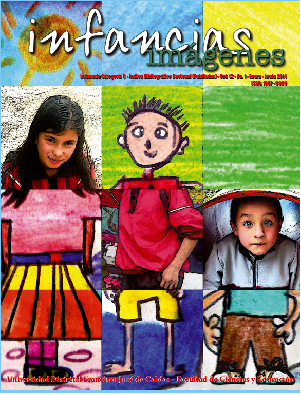
Imagen de apoyo de  Imaginarios sociales de infancia en situación de discapacidad

Imaginarios sociales de infancia en situación de discapacidad

Por: Sandra Bastidas Santacruz | Fecha: 28/04/2013

RESUMENEl niño con discapacidad transita en medio de significaciones, creencias y sentires determinantes en su paso por la infancia. El estudio del imaginario permite una mirada no reduccionista, en la cual es posible develar estructuras de significación que den cuenta de la cultura a través del lenguaje. Esto implica, examinar profundamente el discurso social hasta contemplar imágenes, representaciones y sentimientos. Las investigaciones sobre el tema son escasas y se centran en los diagnósticos clínicos del niño. También llama la atención que en el recorrido histórico por la infancia no sea visible el concepto del niño con discapacidad. El objetivo de este estudio fue explorar las significaciones imaginarias que tienen los docentes de artes sobre el niño en situación de discapacidad en un municipio de Cundinamarca. Mediante un estudio etnográfico se concluyó que las significaciones imaginarias de infancia evocan el niño premoderno y al origen clínico de la discapacidad del siglo XVIII.  ABSTRACTThe child with a hándicap goes through significances, beliefs and feelings that are the determining factor in his childhood.  The study of the imaginary allows a non-reductionist sight, which it is posible to disclose significant structures that account the culture through the language. It implies, check deeply the social speech until gazing at images, renderings and feelings.Researches about this topic are not enough and focus on child clinical diagnostics. It also calls the attention that in the historic road around childhood the concept of a handicapped child has not been visible.The aim of this project was to explore the imaginary significances that Arts teachers have got about a child with a situation of disability in a town of Cundinamarca. Through an ethnographic research it was concluded that imaginary significances call up the pre-modern child and the clinic origin of disabilities during eighteenth century.
Fuente: Revista Infancias Imágenes Formatos de contenido: Publicaciones periódicas
  • Temas:
  • Otros
  • Educación
  • Medicina

Compartir este contenido

Imaginarios sociales de infancia en situación de discapacidad

Copia el enlace o compártelo en redes sociales

Compartir este contenido

Du traitement des kystes de l'ovaire

Copia el enlace o compártelo en redes sociales

Imagen de apoyo de  Positive Affect and Functional Somatic Symptoms in Young Adults: Do health behaviors mediate the association?/ Afecto Positivo y Sintomas Somáticos Funcionales en Adultos Jóvenes: ¿Los comportamientos de salud median la asociación?

Positive Affect and Functional Somatic Symptoms in Young Adults: Do health behaviors mediate the association?/ Afecto Positivo y Sintomas Somáticos Funcionales en Adultos Jóvenes: ¿Los comportamientos de salud median la asociación?

Por: María Angélica Acevedo Mesa | Fecha: 2018

Background: Functional Somatic Symptoms (FSS) are symptoms for which an underlying pathology cannot be found. High negative affect (NA) has been linked to the etiology of FSS, but little is known about the role of Positive Affect (PA). PA has been related to a lower risk for the onset of certain chronic diseases and it has been linked to healthier behaviors, which could mediate the association with FSS. Objectives: 1) To test if PA is related to current FSS and if it can predict longitudinal changes in FSS. 2) To test the role of health behaviors (alcohol consumption, smoking, and physical activity) as mediators. 3) To test if NA and sex modify the effect of PA on FSS. Methods: Data from the ‘TRacking adolescents’ individual lives’ survey’ (TRAILS) cohort were used (N=1247 cases). PA was measured with the PANAS schedule and FSS with the physical complaints subscale from the ASR. Regression analyses with bootstrapping were performed to explore the relationship between PA and FSS, and the interactions in moderation analysis. Mediation analyses were performed to estimate the indirect effect of PA on FSS through health behaviors. A PCA was performed on the physical complaints subscale of ASR, and secondary analyses were performed for the identified components. Results: PA had a negative significant association with current FSS when adjusted for covariates [B = - 0.004; BCa 95% CI = ( - 0.006 ; - 0.002)]. The association was not significant longitudinally when adjusted for covariates. No mediation or interaction was found. Two components of the physical complaints subscale were identified on the PCA. In the secondary analysis, PA was significantly related to the component “general physical symptoms” [B= - 0.019; BCa 95% CI = ( - 0.0028 ; - 0.011)] but not to the component “gastrointestinal symptoms”. Conclusion: High PA was significantly related to current lower levels of FSS, but the effect was small. Health behaviors did not mediate the association. The results of this study elucidate the need to further research individual variations, and day-to-day fluctuations on affect to obtain more insight on the etiology of FSS. The relevance of the results is theoretical rather than clinical. Introducción: Los Síntomas Somáticos Funcionales (SSF) son síntomas cuya patología subyacente no ha sido encontrada. Altos niveles de Afecto Negativo (AN) se ha relacionado con la etiología de los SSF, pero existe poca información sobre el rol del Afecto Positivo (AP). El AP se ha relacionado con un menor riesgo de aparición de enfermedades crónicas y se ha relacionado con la adopción conductas más sanas, las cuales podrían mediar la asociación entre el AP y los SSF. Objetivos: 1) Examinar si el AP está relacionado con SSF, transversal y longitudinalmente. 2) Evaluar el papel de los comportamientos de salud (consumo de alcohol, fumar y actividad física) como mediadores de la relación entre AP y SSF. 3) Explorar si el AN y el sexo modifican el efecto del AP en los FSS. Métodos: Se utilizó una muestra tomada del estudio de cohorte ‘TRacking adolescents’ individual lives’ survey’ (TRAILS) (N = 1247 casos). El AP se midió con el cuestionario PANAS y los SSF con la subescala de síntomas físicos del cuestionario “Adult Self Report” (ASR). Se realizaron análisis de regresión con método de bootstrapping para explorar la relación entre AP y SSF, y las interacciones entre AP y AN, y AP y sexo en el análisis de moderación. Se realizaron análisis de mediación para estimar el efecto indirecto del AP sobre los SSF a través de comportamientos de salud. Se realizó un Análisis de Componentes Principales (ACP) en la subescala de síntomas físicos del cuestionario ASR y se realizaron análisis secundarios para los componentes identificados. Resultados: El AP tuvo una asociación significativa negativa con los SSF transversalmente cuando incluyeron las covariables en el modelo [B = - 0.004; BCa 95% CI = (- 0.006; - 0.002)]. Longitudinalmente, la asociación no fue significativa cuando se incluyeron las covariables. No se encontró mediación o interacción. Dos componentes de la subescala de quejas físicas se identificaron en la ACP. En el análisis secundario, el AP se relacionó significativamente con el componente "síntomas físicos generales" [B = - 0.019; BCa 95% CI = (- 0.0028; - 0.011)] pero no con el componente "síntomas gastrointestinales". Conclusión: Altos niveles de AP están relacionados significativamente con bajos niveles de SSF, pero tienen un efecto pequeño. Los comportamientos de salud no median esta relación. Los resultados de este estudio muestran la necesidad de investigar más las variaciones individuales y las fluctuaciones diarias en el afecto para obtener más información sobre la etiología de los SSF. La relevancia de los resultados es teórica más que clínica.
Fuente: Biblioteca Virtual Banco de la República Formatos de contenido: Tesis
  • Temas:
  • Otros
  • Medicina

Compartir este contenido

Positive Affect and Functional Somatic Symptoms in Young Adults: Do health behaviors mediate the association?/ Afecto Positivo y Sintomas Somáticos Funcionales en Adultos Jóvenes: ¿Los comportamientos de salud median la asociación?

Copia el enlace o compártelo en redes sociales

Imagen de apoyo de  Humanitarian Worker's Lifestyle: Challenges of Internacional Organizations Integrating Health Practices in Staffcare Programs

Humanitarian Worker's Lifestyle: Challenges of Internacional Organizations Integrating Health Practices in Staffcare Programs

Por: María Alejandra Caicedo Bucheli | Fecha: 2015

The increasing awareness of the risks and demands of humanitarian work has prompted the strengthening of safety and mental care protection strategies for humanitarian staff in the last decade. Humanitarian organizations in their duty of care are transforming their programs towards more holistic health approaches for their personnel. However, some organizational dynamics plus the complexity of the context where they operate, poses a variety of difficulties to promote healthy lifestyles for those involved in the humanitarian aid sector. Through searching databases and conducting interviews with researchers and health staff managers from four International Humanitarian Organizations, this document explores health practices covered by these organizations’ units of staff care. The main challenges in promoting health are related to issues inherent to the definition of the concept of lifestyle itself; narrow staff care policies, cultural diversity, living locations constraints, weaknesses in health data gathering systems and an organizational culture that neglects selfcare.
Fuente: Biblioteca Virtual Banco de la República Formatos de contenido: Tesis
  • Temas:
  • Otros
  • Medicina

Compartir este contenido

Humanitarian Worker's Lifestyle: Challenges of Internacional Organizations Integrating Health Practices in Staffcare Programs

Copia el enlace o compártelo en redes sociales

Compartir este contenido

Atoxil: observaciones sobre su valor terapéutico en la sífilis

Copia el enlace o compártelo en redes sociales

Compartir este contenido

El componente social en los Distritos de Transferencia de Tecnología.

Copia el enlace o compártelo en redes sociales

Compartir este contenido

Ovinos.

Copia el enlace o compártelo en redes sociales

Compartir este contenido

El cultivo del repollo

Copia el enlace o compártelo en redes sociales

Selecciona las Colecciones en las que vas a añadir el contenido

Para consultar los contenidos añadidos busca la opción Tus colecciones en el menú principal o en Mi perfil.

Mis colecciones

Cargando colecciones

¿Deseas limpiar los términos de la búsqueda avanzada?

Vas a limpiar los términos que has aplicado hasta el momento para poder rehacer tu búsqueda.

Selecciona las Colecciones en las que vas a añadir el contenido

Para consultar los contenidos añadidos busca la opción Tus colecciones en el menú principal o en Mi perfil.

Mis colecciones

Cargando colecciones