Saltar navegación e ir al contenido principal
Biblioteca digital de Bogotá
Logo BibloRed
Cargando contenido
¿Qué estás buscando?
  • Escribe palabras clave como el título de un contenido, un autor o un tema que te interese.

  • Búsqueda avanzada

Seleccionar

Contenidos y Experiencias Digitales

Filtrar

Formatos de Contenido
Tipo de colección
Género
Idioma
Derechos de uso

Selecciona contenidos según las condiciones legales para su uso y distribución.

Estás filtrando por

Cargando contenido

Se encontraron 3501 resultados en recursos

Imagen de apoyo de  Segunda parte, Capítulo 10 - El café en Colombia (1850-1970) - Segunda edición

Segunda parte, Capítulo 10 - El café en Colombia (1850-1970) - Segunda edición

Por: Marco Palacios | Fecha: 1983

En este capítulo sólo aspiramos trazar un cuadro de brocha gorda sobre las transformaciones estructurales de las zonas cafeteras, en el que existen varios huecos considerables: a) no se menciona la población excepto en el caso del papel de las emigraciones; b) apenas se alude indirectamente a la agricultura no-cafetera y a la ganadería; c) se basa en estadísticas muy agregadas que por su misma naturaleza encubren el carácter heterogéneo de las zonas cafeteras colombianas y d) se menciona apenas de pasada el papel de la Federación de Cafeteros y de los organismos de crédito.
Fuente: Biblioteca Virtual Banco de la República Formatos de contenido: Otros
  • Temas:
  • Otros
  • Economía

Compartir este contenido

Segunda parte, Capítulo 10 - El café en Colombia (1850-1970) - Segunda edición

Copia el enlace o compártelo en redes sociales

Imagen de apoyo de  Informe de Coyuntura Económica Regional - Cesar 2009

Informe de Coyuntura Económica Regional - Cesar 2009

Por: Banco de la República (Bogotá); Colombia. Departamento Administrativo Nacional de Estadí­stica - DANE | Fecha: 2010

Informe general de la economía departamental de Cesar para el año 2009. A lo largo del documento se mencionan variaciones en los índices de desempleo, exportaciones e importaciones, actividades financieras, construcción de infraestructura y sacrificio de ganado con respecto al periodo anterior.
Fuente: Biblioteca Virtual Banco de la República Formatos de contenido: Tesis
  • Temas:
  • Economía

Compartir este contenido

Informe de Coyuntura Económica Regional - Cesar 2009

Copia el enlace o compártelo en redes sociales

Imagen de apoyo de  Informe de Coyuntura Económica Regional - Tolima 2000 IV Trimestre

Informe de Coyuntura Económica Regional - Tolima 2000 IV Trimestre

Por: Colombia. Departamento Administrativo Nacional de Estadí­stica - DANE | Fecha: 2001

Informe general de la economía departamental de Tolima para el IV trimestre del año 2000. A lo largo del documento se mencionan variaciones en los índices de desempleo, exportaciones e importaciones, actividades financieras, construcción de infraestructura y sacrificio de ganado con respecto al periodo anterior.
Fuente: Biblioteca Virtual Banco de la República Formatos de contenido: Tesis
  • Temas:
  • Economía

Compartir este contenido

Informe de Coyuntura Económica Regional - Tolima 2000 IV Trimestre

Copia el enlace o compártelo en redes sociales

Imagen de apoyo de  Credit value on the presence of credit risk: a dynamic method to coordinate customer life time value and credit risk management decisions = Valor del cliente en presencia de riesgo de crédito

Credit value on the presence of credit risk: a dynamic method to coordinate customer life time value and credit risk management decisions = Valor del cliente en presencia de riesgo de crédito

Por: Johanna Cardona Hernández | Fecha: 2013

Customer life time value (CLV) and delinquency behavior are two of the most important firm key performance indicators at the banking industry, and at any other business scenario in which customers are granted credits or loans. Coordination in decisions regarding these two important variables is essential to achieve overall firm performance. We develop a dynamic method that allows simultaneous coordination between CLV and credit risk management decisions while taking into account their time varying behavior, the observed and unobserved customer heterogeneity, and the panel data structure inherent to the CLV-credit risk context. The method, which is a combination of the extended Kalman filter for exponential family of distributions and a fixed effects model has not been illustrated and/or implemented before. Therefore, we show its validity form a theoretical and computational point of view, and how its results can be interpreted to make the desired decision coordination task using synthetic data.
Fuente: Biblioteca Virtual Banco de la República Formatos de contenido: Tesis
  • Temas:
  • Otros
  • Economía

Compartir este contenido

Credit value on the presence of credit risk: a dynamic method to coordinate customer life time value and credit risk management decisions = Valor del cliente en presencia de riesgo de crédito

Copia el enlace o compártelo en redes sociales

Imagen de apoyo de  Perspectives on the Industrial Development of Latin American Countries

Perspectives on the Industrial Development of Latin American Countries

Por: Lorena Esmeralda Guarnizo Bonilla | Fecha: 2016

A few years ago, most of the Latin American countries followed an import substitution strategy (Garay, L. J., 1998) that sought the protection of the industry inwards. After the Consensus of Washington , these followed more open market policies. It resulted in a poor industrial development focused on natural resource-intensive industries. This situation coupled with the political structure of these countries, -fragmented-multiclass states - left several of them behind the global marketplace, and struggling to become competitive. Nowadays, regarding the special circumstances the region is facing -the devaluation of most LA currencies, a drop of oil prices, the US economic recovery, and the boost of Free Trade Agreements along the region- the relevance of this issue is raised once again. This article discusses some programs that governments from the region should foster to yield deep structural changes that benefit from free trade whilst promoting industrial development. ______________________ 1) Gore, C. (2000) claims that the Consensus of Washington was the shift from State-led to market-oriented policies. Additionally, he underpins that after this, problems related to development were framed in that time. 2) Kohli, A. (2004) uses this term to classify developing countries that he considers are well-established because their leaders are held accountable by citizens for their bad performance or poor policies. Notwithstanding, in these countries, leaders are more worried about the political support they receive than for delivering good public policies. He also indicates that the countries are fragmented because they rely on a class alliance between Government and private sector. In these States is common to find leaders that promise more than they can deliver.
Fuente: Biblioteca Virtual Banco de la República Formatos de contenido: Artículos
  • Temas:
  • Otros
  • Economía

Compartir este contenido

Perspectives on the Industrial Development of Latin American Countries

Copia el enlace o compártelo en redes sociales

Imagen de apoyo de  Scarcity Price of Electricity: Lessons, new definitions and policy recommendations from the Colombian Electrical Market

Scarcity Price of Electricity: Lessons, new definitions and policy recommendations from the Colombian Electrical Market

Por: Emanuel Llanos Pérez | Fecha: 2016

The Colombian government introduced a capacity market to promote the diversification in the energy matrix, and protect users from high prices derived from dry seasonal events. Unfortunately, the flaws in the scarcity price definition- a mechanism that activates the capacity market obligation and sets a cap price for the spot market- have resulted in a market failure. Specifically, some generation plants have been forced to be unavailable because their variable costs are significantly higher than the scarcity price. This research presents an analysis and some possible alternatives fo the definition of the scarcity price in the Colombian Electricity market. An excel-based model was developed in order to analyse and compare different scarcity price definitions under three dimensions: i) Water management resources. ii) Penalty exposure of agents. iii) Change in prices for final demand. Results suggest that the proposed change in the scarcity price definition would induce to more efficient water management resources, and a reduction in the penalty exposure of agents. Complementary actions are recommended for policy makers in order to avoid some possible side effects of the implementation of a new scarcity price definition.
Fuente: Biblioteca Virtual Banco de la República Formatos de contenido: Tesis
  • Temas:
  • Otros
  • Economía

Compartir este contenido

Scarcity Price of Electricity: Lessons, new definitions and policy recommendations from the Colombian Electrical Market

Copia el enlace o compártelo en redes sociales

Imagen de apoyo de  Circular Economy Transition in the Context of Low and Middle-income countries: Assessment of the Circular Economy Transition Readiness in Colombia

Circular Economy Transition in the Context of Low and Middle-income countries: Assessment of the Circular Economy Transition Readiness in Colombia

Por: Claudia Lorena García Caicedo | Fecha: 2016

Colombia, as many low and middle-income countries, has been deeply influenced by the predominant linear economic model by using their extensive natural resources to create, to some extent, wealth. However, the current environmental problems and global economy deceleration are challenging the country to find new ways to growth the economy without harming the environment. The circular economy (CE) seems to be a promising model to achieve this goal by reducing the dependency on non-renewables, improving the competitiveness through innovation and ¬generating new and rewarding jobs. Thus, this paper explored the enablers that would facilitate the transition towards a CE in Colombia given its specific circumstances such as development gaps in infrastructure and a large informal sector involved in recycling. As a result, an enabling framework was proposed based on secondary data and the insights from interviewing an expert on the field. This framework was the baseline to assess the CE in Colombia and to identify the main interventions that are required to support a transition towards a more sustainable economy. This assessment was carried out through secondary data and some interviews with professionals performing in sustainable development in the country. The evaluation showed that Colombia does not have at the moment the right enabling conditions for a CE deployment. Therefore, the country presents opportunities to reinforce a CE transition in terms of political coherence and a suitable fiscal framework that promotes sustainable practices as well as a robust IT infrastructure and ICTs appropriation among the enterprises to develop business models framed within the CE principles. Moreover, it is required a safe and profitable recovery of materials discouraging the current practices of recycling. Finally, it is important to promote financing schemes and the development of design-led approaches to production among the industrial sector to foster innovation as a key building block of a CE. The findings of this dissertation provide a starting point for future research about the enablers for a CE transition in the context of low and middle-income economies.
Fuente: Biblioteca Virtual Banco de la República Formatos de contenido: Tesis
  • Temas:
  • Otros
  • Economía

Compartir este contenido

Circular Economy Transition in the Context of Low and Middle-income countries: Assessment of the Circular Economy Transition Readiness in Colombia

Copia el enlace o compártelo en redes sociales

Imagen de apoyo de  La Dynamique des Prix et les Echanges : une Histoire Récente du ‘Processus de Hahn

La Dynamique des Prix et les Echanges : une Histoire Récente du ‘Processus de Hahn

Por: John Mauro Perdomo Munévar | Fecha: 2009

Resumen: La principal contribución de la economía a las ciencias sociales es la idea según la cual el mecanismo de libre mercado es capaz de organizar las actividades económicas privadas en un modo favorable para todos los miembros de la sociedad. En este sentido, una completa y satisfactoria teoría sobre el funcionamiento del mercado es el principal desafío para los economistas. Sin embargo, el análisis económico ha restringido la teoría de mercado al estudio del equilibrio general competitivo y sus características, a pesar de la ausencia de una demostración de su estabilidad y de no contar con una tecnología de intercambio que explique la dinámica del mercado. En este sentido, es nuestro propósito presentar una historia sobre la evolución de un modelo dinámico en el cual las transacciones pueden conducir a precios de desequilibrio, y en el que es posible obtener resultados robustos en términos de estabilidad. Dicho modelo, conocido como el ‘Proceso de Hahn’, evolucionó en el periodo comprendido entre 1962 y 1971 con la introducción de un medio de intercambio. Esta evolución, a pesar de su interés para la teoría del mercado, ha sido apenas abordada por los teóricos e historiadores del pensamiento económico. El argumento que desarrollamos muestra cómo, en la versión original del Proceso de Hahn (Hahn y Negishi 1962), hay que admitir la posibilidad de que los agentes sean forzados por el Subastador para que se lleven a cabo las transacciones que garantizan la estabilidad de los intercambios en torno a un equilibrio general competitivo (Veendorp 1969). No obstante, admitir que los intercambios sean forzados, va en contra del principio de interés privado que es base de la teoría del mercado. Siguiendo a Negishi(1982), mostramos que la introducción de medios de intercambio puede resolver tal problema al mismo tiempo que introduce una tecnología de intercambio en el modelo (Arrow and Hahn 1971).Concluimos esta historia con las preguntas y alternativas que surgen de la versión “monetaria” del Proceso de Hahn a la luz de los obstáculos que enfrenta el análisis en desequilibrio. Este ejercicio muestra el interés y la fecundidad de la historia del pensamiento económico como un recurso para la renovación y la la innovación teórica. Abstract: The main contribution of economics to social sciences is the idea that the free market mechanism is capable of organizing private economic activities in a way that is favorable to all members of society. In this sense, a complete and satisfactory theory about the function of the market is the principal challenge for an economist. However, the economic analysis has restricted market theory to the study of the competitive general equilibrium and its characteristics, despite the absence of a demonstration of its stability and despite not having a technology of exchange to explain the market dynamics. In this sense, it is our purpose to present a story about the evolution of a dynamic model in which transactions might lead to disequilibrium prices, and in which it is possible to obtain robust results in terms of stability. The latter model, known as the Hahn Process, evolved in the period between 1962 and 1971 with the introduction of a means of exchange. This evolution, in spite of being of great interest for the market theory, has been approached marginally by theoreticians and historians of economic thought. The argument we develop shows how, in the original version of the Hahn process (Hahn and Negishi 1962), one must admit the possibility of agents being forced by the auctioneer to carry out transactions that guarantee the stability of exchanges towards a competitive general equilibrium (Veendorp 1969). However, to admit that exchanges are forced, breaks down the principle of private interest that is at the very base of market theory. Following Negishi (1982), we show that the introduction of a means of exchange solves the latter problem and simultaneously introduces a transactional technology to the model (Arrow and Hahn 1971). We conclude this story with the questions and alternatives that arise from the “monetary” version of the Hahn Process in light of the obstacles established by the equilibrium analysis. This exercise shows the interest and the fecundity of the history of economic throught as a source of renewal and theoretical innovation.
Fuente: Biblioteca Virtual Banco de la República Formatos de contenido: Tesis
  • Temas:
  • Otros
  • Economía

Compartir este contenido

La Dynamique des Prix et les Echanges : une Histoire Récente du ‘Processus de Hahn

Copia el enlace o compártelo en redes sociales

  • Exclusivo BibloRed
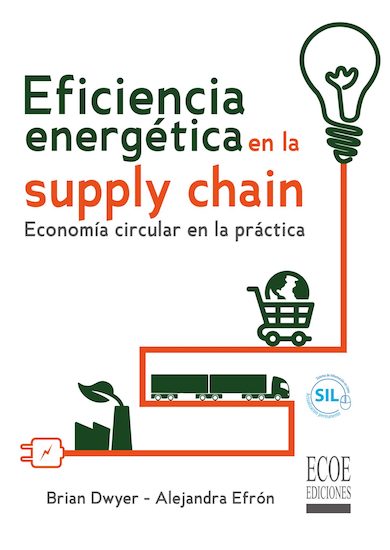
Imagen de apoyo de  Eficiencia energética en la supply chain: economía circular en la práctica

Eficiencia energética en la supply chain: economía circular en la práctica

Por: Brian Dwyer | Fecha: 2017

La sostenibilidad, respaldada por una economía circular, es viable siempre que forme parte de la visión, diseño y funcionamiento de nuestras sociedades. Este libro aborda los aspectos especializados de la eficiencia en el uso de recursos (energía, agua y materiales residuales) y los integra en otras áreas, como la formulación de estrategias, la gestión operativa, las finanzas, la gestión de riesgos y la cultura organizacional. Este manual abarca una amplia gama de temas y materiales, adaptados al contexto de la sostenibilidad en América Latina. La Guía Quick Start facilita la navegación y la identificación de elementos clave en el libro.
Fuente: Digitalia Formatos de contenido: Libros
  • Temas:
  • Economía

Compartir este contenido

Eficiencia energética en la supply chain: economía circular en la práctica

Copia el enlace o compártelo en redes sociales

  • Exclusivo BibloRed
Imagen de apoyo de  Pyme : estrategia para su internacionalización

Pyme : estrategia para su internacionalización

Por: Piedad Cristina Martínez Carazo | Fecha: 2009

Entre las decisiones estratégicas que se deben tomar en cualquier proceso de internacionalización empresarial sobresale la de seleccionar el mecanismo de entrada para operar en cada país-mercado elegido, es decir, resolver cómo internacionalizarse de la manera más apropiada. Una gran cantidad de empresas, sobre todo las Pymes, se decantan -en principio- por la exportación, actividad que puede desarrollarse en solitario o a través de mecanismos como los consorcios de exportación. En esta obra, el lector encontrará valiosa información acerca de las principales teorías de la dirección estratégica, así...
Fuente: Digitalia Formatos de contenido: Libros
  • Temas:
  • Economía

Compartir este contenido

Pyme : estrategia para su internacionalización

Copia el enlace o compártelo en redes sociales

Selecciona las Colecciones en las que vas a añadir el contenido

Para consultar los contenidos añadidos busca la opción Tus colecciones en el menú principal o en Mi perfil.

Mis colecciones

Cargando colecciones

¿Deseas limpiar los términos de la búsqueda avanzada?

Vas a limpiar los términos que has aplicado hasta el momento para poder rehacer tu búsqueda.

Selecciona las Colecciones en las que vas a añadir el contenido

Para consultar los contenidos añadidos busca la opción Tus colecciones en el menú principal o en Mi perfil.

Mis colecciones

Cargando colecciones